






If you’re planning a boiler replacement, one of the biggest questions is where the new boiler should actually go. Most people focus on the brand or output, but location matters just as much. It affects efficiency, pipework layout, noise levels and how easy the boiler is to service in years to come.
I’ve fitted boilers in all sorts of places across homes in New Malden, Sutton and Epsom, from tidy new-build cupboards to draughty old lofts. The right spot depends on your property, your heating system and how you use the space day to day. Here’s a practical look at the pros and cons of each common location.
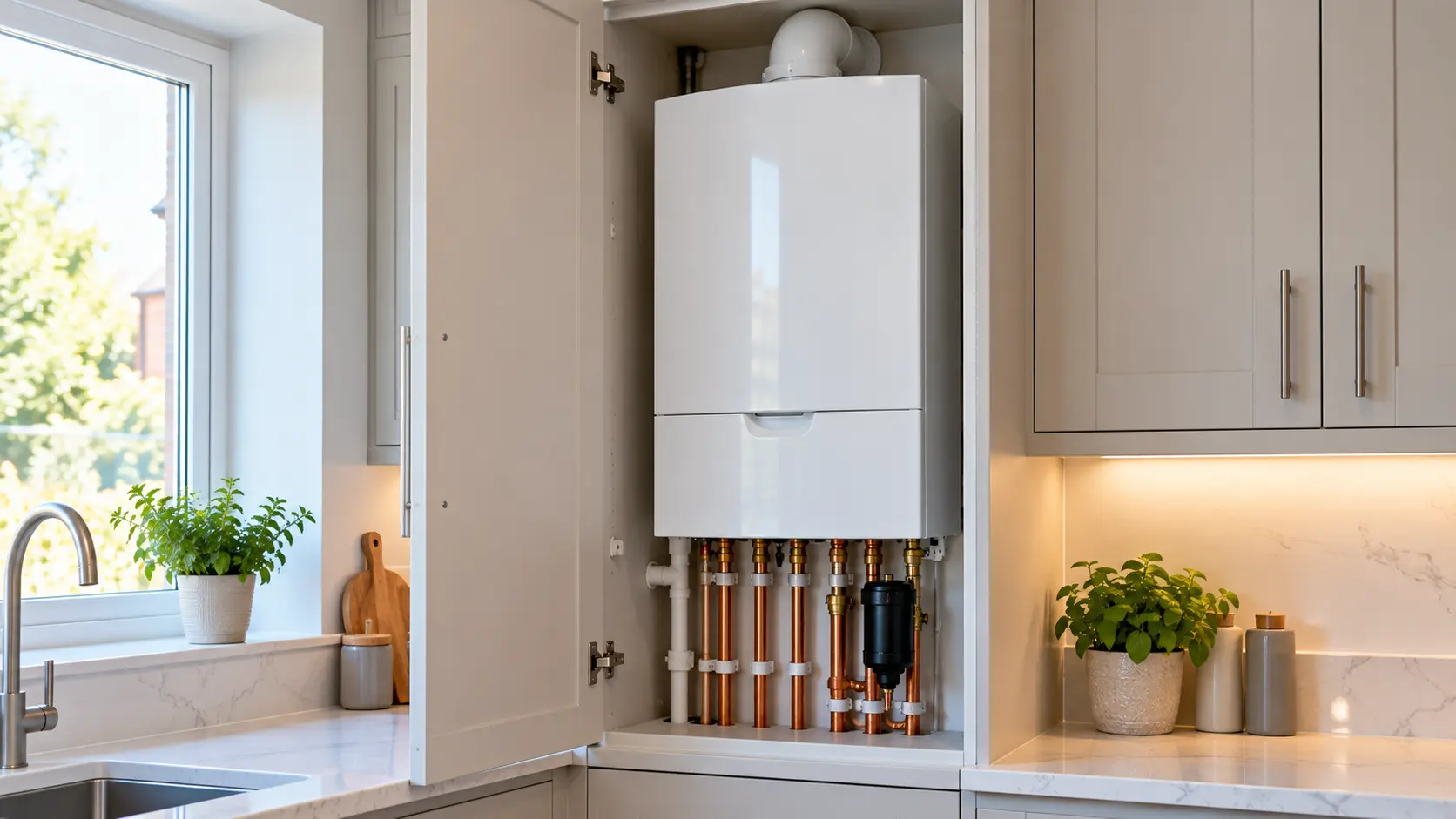
Why boiler location matters for efficiency and safety
A boiler isn’t just another appliance you can tuck anywhere. It needs proper ventilation, safe flue positioning and enough clearance to be serviced properly. Put it in the wrong place and you can make future repairs awkward, reduce efficiency or run into compliance issues.
The length and layout of pipework also makes a difference. Longer pipe runs can mean more heat loss and slower response when you turn on a hot tap. In homes where the boiler has been moved from the kitchen to the loft without much thought, I often see reduced water pressure at the far end of the house.
Key factors to consider before choosing a location
Before deciding on a room, think about these basics:
- Space and clearances: Modern combi boilers are compact but still need working space around them for servicing.
- Flue position: The flue must terminate safely outside, away from windows, doors and neighbouring properties.
- Ventilation: Most modern boilers are room-sealed but the cupboard or space must still meet regulations.
- Condensate drainage: Every condensing boiler needs somewhere sensible to discharge condensate.
- Access: If an engineer can’t comfortably get to it, annual servicing becomes a chore.
It’s also worth thinking about noise. Today’s boilers are quiet, but you may still hear a gentle hum or the fan running, especially at night.
Room-by-room guide
Kitchen
The kitchen is one of the most common places for a boiler, especially in semis and terraces built from the 60s onwards.
Pros: It’s usually on an outside wall, making flue installation straightforward. Gas and water supplies are often already there, which keeps installation simpler. It’s also easy to access for servicing.
Cons: It takes up cupboard space. While modern boilers fit neatly inside a standard kitchen unit, you do lose storage. Some homeowners also prefer a cleaner look without pipework.
If your current boiler is in the kitchen and you’re happy with it there, keeping it in the same spot often keeps disruption and cost down.
Airing cupboard
Airing cupboards were traditionally home to older system boilers and hot water cylinders.
Pros: Central location in the house can mean shorter pipe runs to bathrooms. It keeps the boiler out of sight and away from living areas.
Cons: Space can be tight. Modern boilers need specific clearances and I’ve had jobs in Sutton where we’ve had to remove shelving to stay within regulations. Ventilation and flue routing can also be more complex if the cupboard isn’t on an outside wall.
If you’re keeping a system boiler with a cylinder, the airing cupboard often still makes sense.
Loft
Loft installations have become more popular over the last 15 years, particularly where homeowners want to free up kitchen space.
Pros: Completely out of the way. Ideal if space is limited downstairs. Flues are often easy to route through the roof.
Cons: Access is the biggest issue. Engineers need safe loft access, proper boarding and lighting. In winter, there’s also the risk of pipework freezing if insulation isn’t done properly. I’ve attended breakdowns in Epsom during cold snaps where condensate pipes in lofts have frozen solid.
If you’re considering a loft installation, make sure it’s properly boarded around the boiler and that pipework is insulated to a high standard.
Garage
Garages can be a good compromise, especially in detached or newer homes.
Pros: Keeps noise out of the main house. Usually plenty of wall space. Easy flue routing through an external wall.
Cons: Garages can get very cold. Pipe insulation is essential and in some cases additional frost protection is needed. If the garage is cluttered, access can become restricted over time.
I often remind customers that what’s tidy on installation day may not be tidy five years later. Engineers still need clear access.
Utility room
If you have a utility room, it’s often the ideal location.
Pros: Away from main living spaces but still easily accessible. Services are usually nearby. Noise is rarely an issue.
Cons: Mainly space related. In smaller homes the utility room can feel cramped once a boiler is fitted.
In newer properties around New Malden, purpose-built utility spaces are often designed with boilers in mind, which makes installation straightforward.
Regulations and safety considerations in the UK
Boiler installations in the UK must comply with Building Regulations and be carried out by a Gas Safe registered engineer. That covers clearances, flue positioning, condensate discharge and ventilation requirements.
For example, flues must be a safe distance from windows and neighbouring boundaries. This can affect where the boiler can legally go, particularly in terraced streets.
You’ll also need adequate access for servicing. Manufacturers specify minimum clearances around the unit. If those aren’t met, it can invalidate the warranty.
If you’re unsure what’s allowed in your property, it’s worth getting advice specific to your area, whether you’re looking at Sutton or Epsom.
Final tips: choosing the best location for your home
In most cases, the best place for your new boiler is either where the old one was or somewhere that keeps pipe runs sensible and access easy.
Ask yourself:
- Will it be easy to service each year?
- Is the flue route safe and compliant?
- Will pipework be protected from freezing?
- Does it affect daily living or storage space?
There’s no single right answer for every home. I’ve seen kitchen moves that transformed storage space and loft installs that made life harder long term. A quick site visit usually makes the decision clearer.
If you’d like practical advice tailored to your property, the team at AMT Heating are always happy to talk through your options and explain what will work best in your home.
If you’re not sure where your new boiler should go, get in touch and we’ll come and look at the options with you.