


The heating has gone on for the first time in months and one radiator is stone cold, or warm at the bottom and cold at the top. Where the cold patch sits usually tells you the cause. Cold at the top means trapped air, which bleeding fixes. Cold at the bottom points to sludge. Cold all over, with the rest of the house warm, is often a stuck valve. If you can’t track it down, our service and repairs team covers homes across Sutton and the surrounding areas in Greater London.
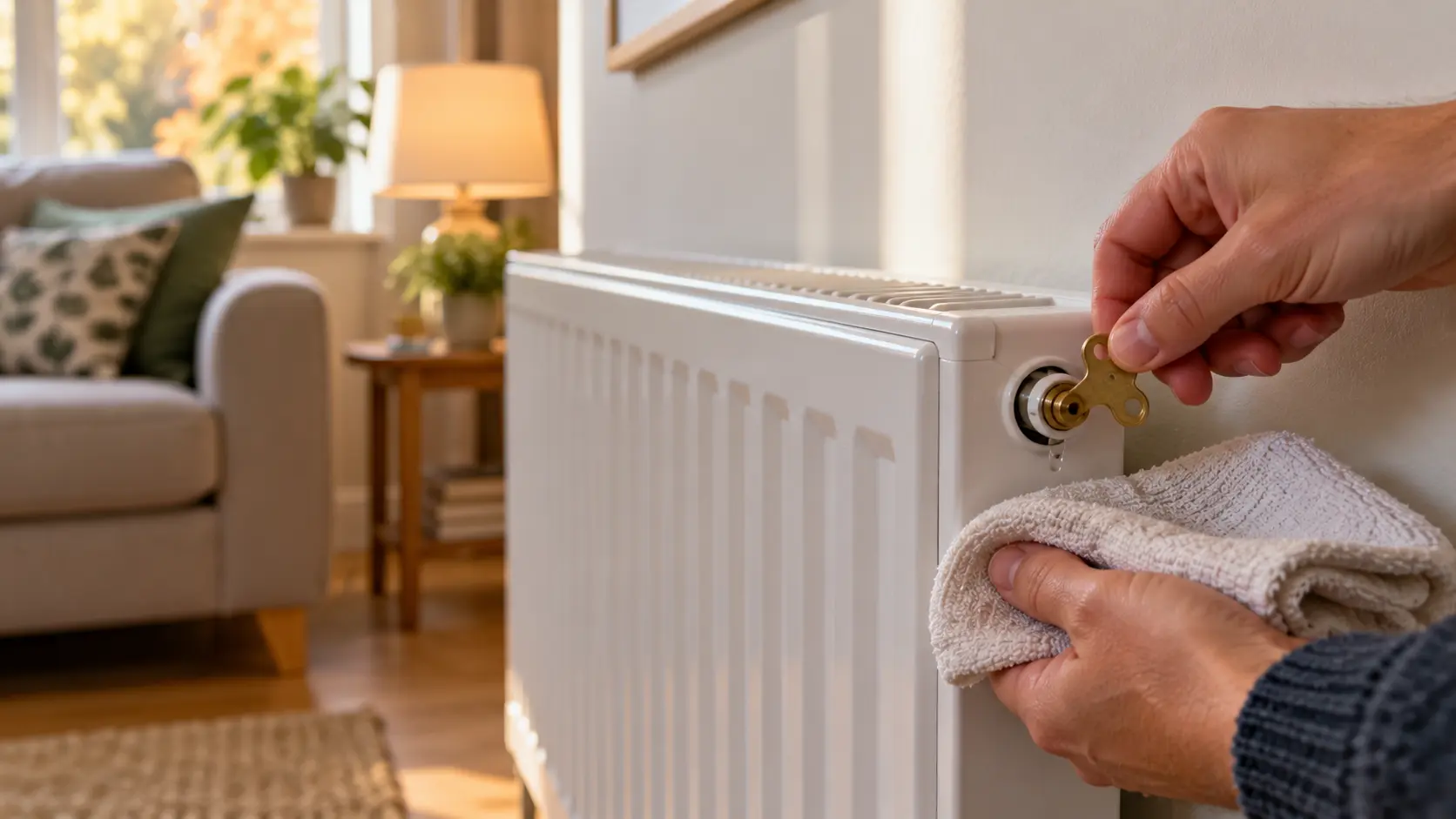
Cold at the top, warm at the bottom
This is trapped air. Air collects at the highest point of the radiator and stops hot water filling it. It’s common when the heating comes back on after summer.
To bleed it:
- Turn the heating off and let the radiators cool.
- Hold a cloth under the bleed valve at the top corner.
- Open the valve a quarter turn with a radiator key until it hisses.
- Close it as soon as water appears.
- Check the boiler pressure gauge and top up if it has dropped.
If the same radiator needs bleeding every few weeks, air is getting into the system somehow, and that’s worth having checked.
Cold at the bottom, warm at the top
This usually means sludge. Over the years, the inside of steel radiators and pipework corrodes and forms a black, muddy deposit. It settles along the bottom of the radiator and stops water flowing through.
Bleeding won’t help. Sludge needs cleaning out of the system, and an engineer can advise whether that means flushing individual radiators or the whole system. A magnetic filter on the boiler return and the right level of inhibitor in the water help stop it building up again.
Cold all over while others are hot
If one radiator stays cold and the rest of the house is warm, check the valves first.
- The TRV. Thermostatic radiator valves can stick closed after a summer of not moving. Take the head off (most unscrew or unclip) and look for a small pin. If it’s stuck down, gently tap or wiggle it until it springs up.
- The lockshield valve. The plain cap on the other end of the radiator may have been closed during decorating or a repair.
- Balancing. Radiators furthest from the boiler can lose out if the system isn’t balanced.
Every radiator is cold
If none of the radiators heat up, the problem is with the boiler, pump or controls rather than one radiator. Check:
- The boiler has power and isn’t showing a fault code
- The pressure gauge is in the normal range
- The thermostat is set above room temperature
- The timer is calling for heat
If all of that looks fine and the hot water works but the heating doesn’t, it could be a diverter valve, motorised valve or pump fault. Those are engineer jobs.
Radiators in Sutton homes
Plenty of homes around Sutton, Carshalton and Worcester Park still have radiators that date back a couple of boiler changes. Older steel radiators are more likely to hold sludge, and a new boiler connected to a dirty system can suffer for it. That’s why a proper survey checks the condition of the system water before a new boiler goes in.
Frequently asked questions
Is it normal for radiators to be hotter at the top?
A little, yes. Hot water enters and rises, so the top is often slightly warmer. A radiator that’s warm at the top and noticeably cold along the bottom is a different matter, and usually points to sludge settling inside it.
Why does my radiator need bleeding every week?
Constant air usually means something is wrong. Common causes include a small leak letting air in, a pump problem drawing air into the system, or gas forming from corrosion inside the pipework. It’s worth having an engineer find the cause rather than bleeding it repeatedly.
Can I fix a stuck TRV myself?
Often, yes. Remove the head, then gently free the pin underneath until it moves up and down. If the pin won’t move, or the valve body leaks, call an engineer. A replacement valve may be needed, which means draining part of the system.
Should I bleed radiators with the heating on?
No. Turn the heating off and let the radiators cool first. Hot water can spray out of the valve and scald, and the system may pull in more air while the pump is running. Once it’s bled, turn the heating back on and check the radiator warms evenly.
Still got a cold radiator?
If you’ve bled it, checked the valves and it’s still cold, get in touch and we’ll come and find out what’s stopping the heat getting through.