


A boiler that breaks down in a rented home in January means a cold tenant, an urgent call and often a bigger bill than if it had been caught in October. The short answer: get the boiler serviced before the cold weather, check the carbon monoxide alarms, protect any empty properties from frost, and give tenants simple guidance so small problems get reported early. For landlords with homes around Sutton, Epsom, Wimbledon, , our landlord services page explains how we can help with all of it.
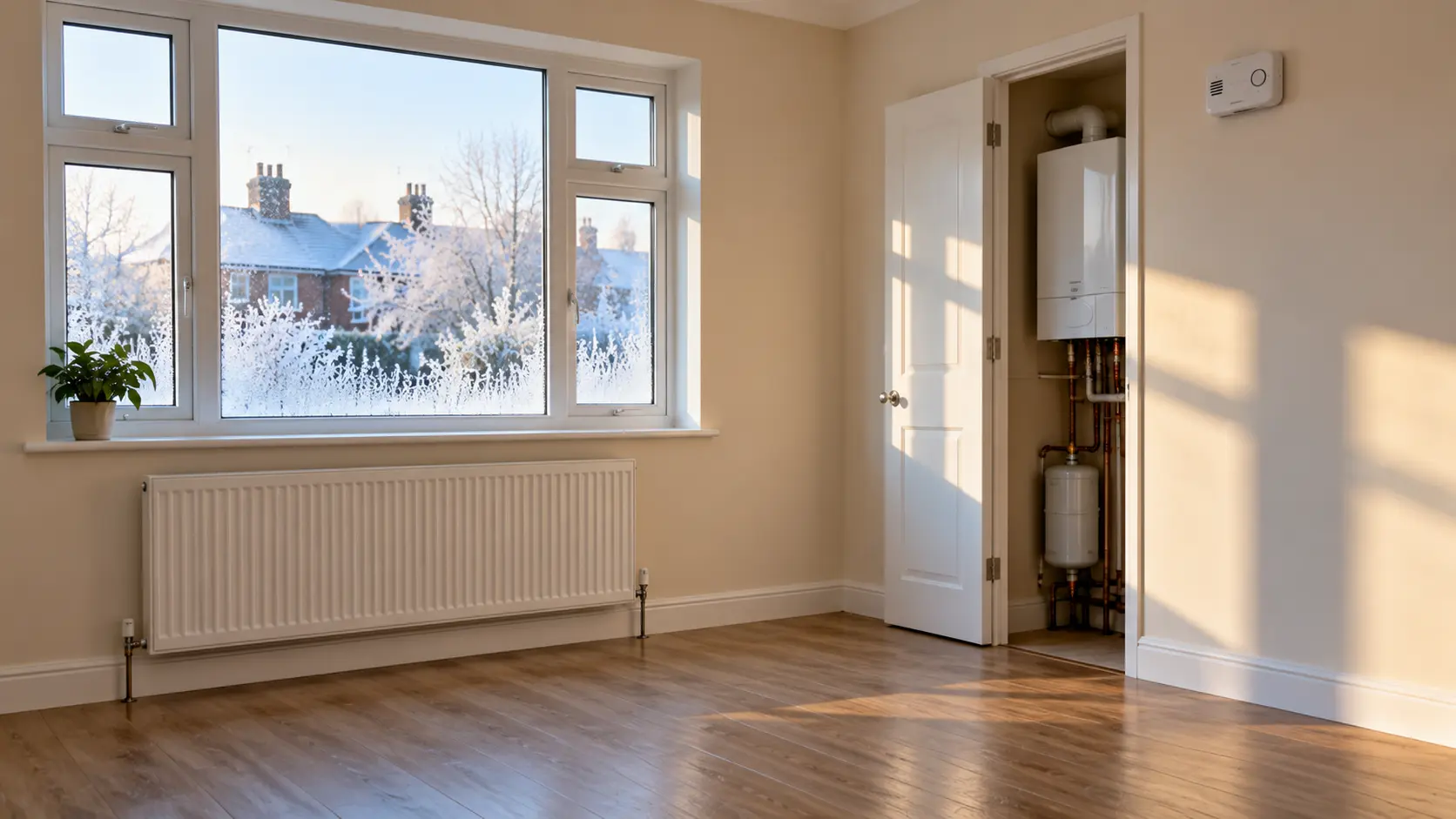
1. Book the boiler service before winter
The annual gas safety check is a legal requirement, but it isn’t the same as a service. A service cleans and checks the boiler so it runs reliably, and it’s usually what the manufacturer’s warranty depends on.
Booking it in early autumn means any worn parts can be replaced before the boiler is working every day. If the gas safety check is due around the same time, ask for both on one visit so the tenant only has to give access once.
2. Check the carbon monoxide and smoke alarms
In England, landlords must fit a carbon monoxide alarm in any room used as living accommodation that has a fixed combustion appliance, such as a gas boiler or gas fire (gas cookers are excluded). Smoke alarms are needed on every storey.
Test them at the start of each tenancy, and repair or replace any alarm a tenant reports as faulty. Check the expiry date printed on CO alarms too, as most have a sealed battery with a limited life.
3. Protect empty properties from frost
A void property in a cold snap is at real risk of burst pipes. Between tenancies:
- Leave the heating on a low or frost-protection setting rather than switching it off
- Check the boiler pressure each time you visit
- Lag exposed pipes in lofts, garages and under-stairs cupboards
- Know where the stopcock is and make sure it turns
- Arrange regular visits if the property will be empty for a while
If you do decide to drain down a long-term empty property, have it done properly and record it, so the system is refilled and tested before anyone moves in.
4. Give tenants a simple heating guide
Many winter callouts are things a tenant could have sorted in minutes with a bit of guidance. A one-page sheet left in the property can cover:
- Where the stopcock is and how to turn it off
- How to check and top up the boiler pressure, if you’re happy for them to do it
- How to bleed a radiator
- What a frozen condensate pipe looks like and how to thaw it safely with warm water
- What to do if they smell gas: leave the property, turn off the supply at the meter if it’s safe, and call the National Gas Emergency Service on 0800 111 999
- Who to call, and when, if the heating or hot water fails
Ask tenants to report drips, damp patches or a boiler that keeps losing pressure straight away. Small leaks found early are cheap to fix.
5. Plan for breakdowns
Heating and hot water fall within a landlord’s repairing obligations, so it’s worth deciding now how you’ll handle a winter breakdown. Have the details of your engineer ready for your letting agent and tenant, and consider keeping a couple of portable electric heaters for emergencies.
If a boiler is old and has needed repeated repairs, replacing it in autumn on your own timetable is usually less disruptive than an emergency swap in midwinter. Our new boilers page explains how we survey homes before quoting.
Letting homes around Sutton in winter
Many rented homes around Sutton, Worcester Park and Epsom are flats and converted houses where boilers sit in cupboards and condensate pipes run along outside walls. These are worth a look before the frosts, especially in properties that have changed hands a few times and where nobody is quite sure how the system was put together.
Frequently asked questions
Do landlords have to provide heating?
Landlords must keep the installations for heating and hot water in repair and proper working order. In practice, that means a working heating system and a prompt response when it fails. Check the current guidance for your type of tenancy.
Can tenants top up the boiler pressure themselves?
Many landlords are happy for tenants to do it, as it’s a simple, safe task using the filling loop. Leave clear instructions and ask tenants to report if they’re having to top up regularly, as that usually means there’s a leak or faulty part.
Should heating be left on in an empty rental property?
In winter, yes, on a low or frost-protection setting. It costs less than repairing burst pipes and water damage. Check the boiler pressure on each visit and make sure your landlord insurance conditions for unoccupied properties are met, as many policies set rules on heating and visits.
Getting your lets ready for winter?
If you’ve got rental properties that need servicing, alarm checks or a once-over before the cold weather, get in touch and we’ll work out a schedule that fits around your tenants.