






A boiler that loses pressure has water escaping from the heating system somewhere, or a component that isn’t holding pressure properly. The usual causes are a small leak in pipework or a radiator valve, recently bled radiators, a faulty pressure relief valve or an expansion vessel that has lost its charge.
On most combi and system boilers, the gauge should read around 1 to 1.5 bar when the heating is cold. Topping it up occasionally is normal. Having to top it up every few days or weeks isn’t, and that’s when a boiler repair visit is worth booking.
kiteche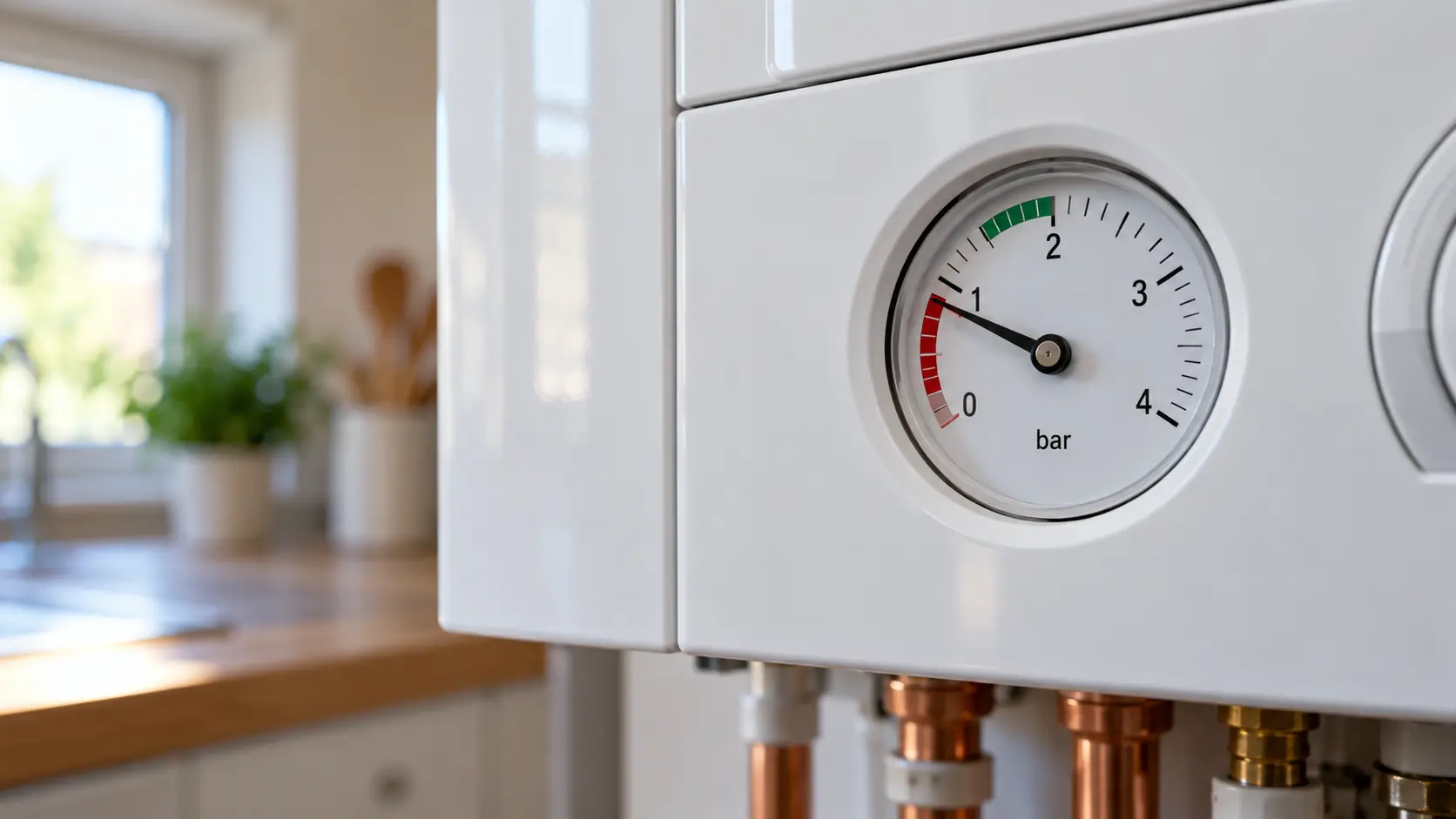
What normal boiler pressure looks like
Sealed heating systems, used with combi and system boilers, run under pressure. The gauge on the front of the boiler shows it.
| Reading (heating cold) | What it means |
| Below 1 bar | Low. The boiler may lock out or show a fault code |
| Around 1 to 1.5 bar | Normal for most boilers |
| Rising towards 2 to 2.5 bar when hot | Normal expansion as water heats |
| Close to 3 bar | Too high. The pressure relief valve may open |
Check your boiler manual, as some manufacturers specify a slightly different range. Older open-vented systems with a tank in the loft don’t have a pressure gauge at all.
The most common causes of pressure loss
Recently bled radiators
Bleeding radiators releases air, and the pressure drops as a result. That’s expected. Top the pressure back up afterwards and it should stay steady.
A small leak somewhere in the system
This is the most common cause of ongoing pressure loss. Look for:
- Drips or damp around radiator valves and pipe joints
- Stains or tide marks on ceilings below radiators or pipework
- Corrosion on radiators, especially along the bottom edge
- Water on the floor under the boiler
Some leaks are hidden under floors or behind walls, so there may be nothing obvious to see.
A faulty pressure relief valve
The pressure relief valve lets water out if pressure gets too high. It usually discharges through a copper pipe that runs to the outside wall. If that pipe is dripping, or you see water marks beneath it, the valve may be letting water past.
A flat expansion vessel
The expansion vessel absorbs the extra volume when water heats up. If it loses its air charge, pressure swings much higher when the heating is on, which can push water out through the relief valve and leave the pressure low when the system cools. A typical sign is pressure that climbs sharply when the heating runs and falls when it’s off.
Internal boiler leaks
Leaks inside the boiler casing, from seals, the heat exchanger or valves, can also cause pressure loss. These need an engineer.
How to top up boiler pressure
Most combi and system boilers have a filling loop, either a braided hose with two valves underneath the boiler or a built-in filling key or lever. The manufacturer’s manual shows how yours works. In general:
- Turn the heating off and let the system cool.
- Open the filling loop valves slowly and watch the gauge.
- Close them when the needle reaches the level in your manual, usually around 1 to 1.5 bar.
- Reset the boiler if it has locked out, then check it restarts.
If you’re unsure which valves to use, or you can’t find the filling loop, it’s safer to ask an engineer than to guess. Never remove the boiler casing.
When to call an engineer
Book a repair if:
- You’re topping up the pressure more than once or twice a year
- The pressure rises sharply when the heating is on
- The relief valve pipe outside is dripping
- You can see a leak but can’t isolate it
- There’s water inside or under the boiler
Leaving a slow leak to carry on can damage ceilings and floors, and constantly adding fresh water brings in oxygen, which speeds up corrosion inside radiators and pipework.
Pressure problems in older Sutton homes
In older homes around Sutton and Worcester Park, pressure loss sometimes shows up after an open-vented system has been converted to a sealed system for a combi boiler. Older radiators and joints that were fine at low pressure can start to weep once the system runs under pressure. It’s one reason a proper survey and system check matter when choosing a new boiler.
Frequently asked questions
Is it dangerous if my boiler pressure is low?
Low pressure isn’t dangerous in itself. The boiler will usually lock out to protect itself. The concern is the cause, such as a leak that could damage your home if it’s ignored.
How often should I have to top up my boiler?
Ideally rarely, perhaps after bleeding radiators. If you need to top up every few weeks, there’s a leak or faulty component somewhere, and it’s worth having it investigated.
Why does my boiler pressure go up and down?
Some rise and fall as the water heats and cools is normal. Large swings, especially rising close to 3 bar when hot, usually point to an expansion vessel that needs recharging or replacing.
Fed up of topping it up?
If you’re forever refilling the boiler and can’t work out where the water’s going, get in touch and one of our engineers will come and track it down.