


If you let a property with gas appliances in England, the law requires a gas safety check on every gas appliance and flue you provide, every 12 months, carried out by a Gas Safe registered engineer. The engineer then issues a gas safety record, often still called a CP12 or landlord gas safety certificate. Existing tenants must get a copy within 28 days of the check, and new tenants before they move in.
It’s one of the most important legal duties landlords have, and the paperwork is only part of it. Here’s what the check covers, the rules around timing and records, and what happens if something fails. For help arranging checks, see our landlord services.
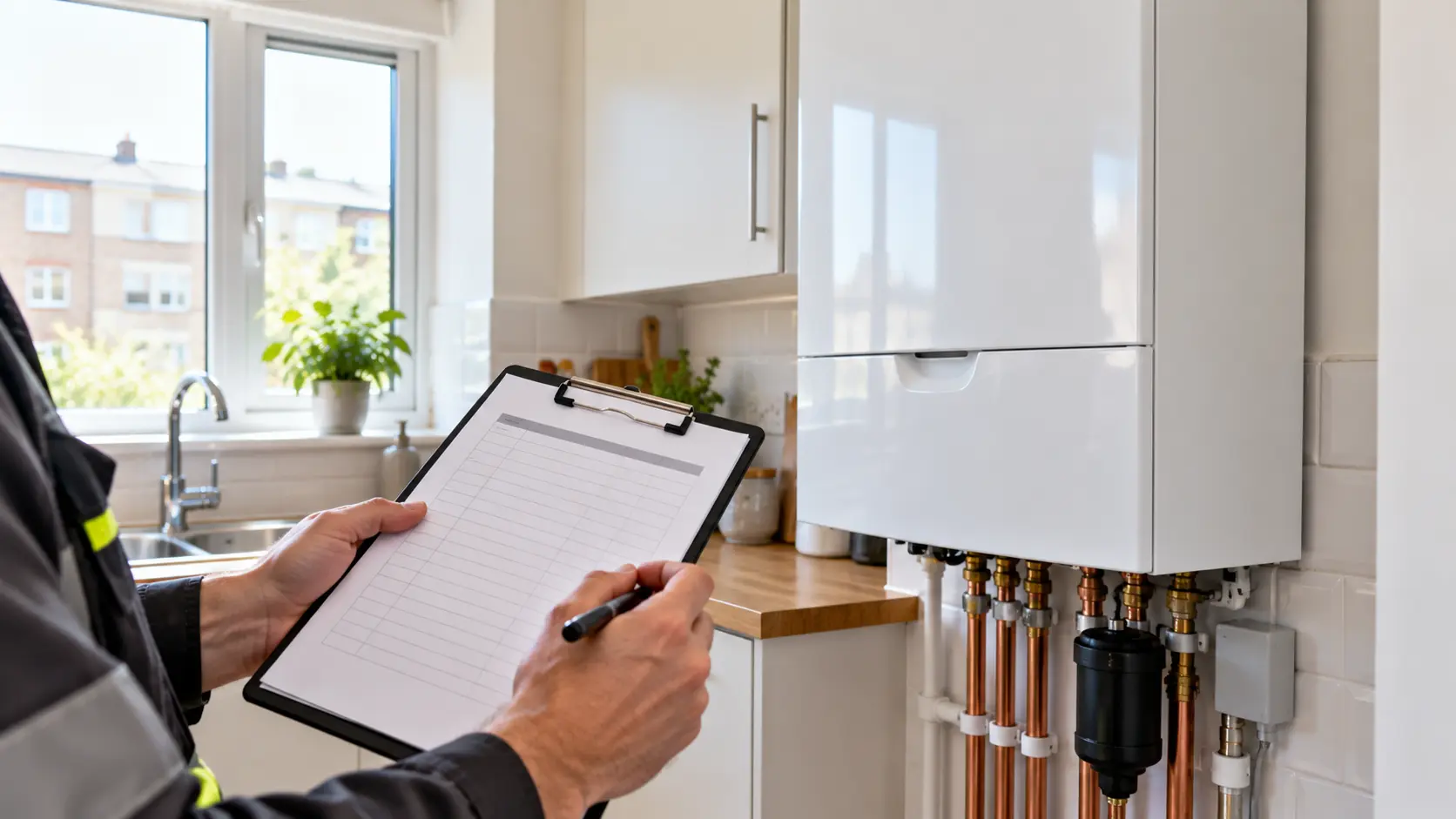
What the law requires
The Gas Safety (Installation and Use) Regulations 1998 set out landlords’ duties. In summary:
- Every gas appliance, fitting and flue you provide must be kept safe and maintained.
- A Gas Safe registered engineer must carry out a safety check every 12 months.
- You must keep a record of each check for at least two years.
- Tenants must receive a copy of the record.
The duty applies to appliances you provide. Appliances owned by the tenant aren’t your responsibility to check, although the flues or chimneys serving them may be.
What’s checked during a landlord gas safety check
The engineer inspects each gas appliance the landlord provides, such as the boiler, gas hob or cooker and gas fire. Checks typically include:
- That the appliance is burning gas correctly and safely
- Ventilation to the appliance
- That flues and chimneys are clearing waste gases properly
- That safety devices work
- Gas tightness of the installation (a tightness test)
The record lists each appliance, where it is, what was checked, whether it’s safe and any defects found. It also includes the engineer’s name, Gas Safe registration number and signature, and the property address.
Timing: can you do the check early?
Yes. Rules introduced in 2018 allow the check to be done up to two months before the deadline while keeping the original expiry date. That gives landlords a window to arrange access without shortening the 12-month cycle.
It’s worth setting a reminder well ahead of the due date, as access can take time to arrange with tenants.
What happens if an appliance fails
If the engineer finds a fault, the record shows it. What happens next depends on how serious it is:
- Immediately Dangerous (ID): the appliance poses an immediate risk. With permission, the engineer will disconnect it and attach a warning label. It must not be used until repaired.
- At Risk (AR): a fault that could become dangerous. The engineer will normally turn the appliance off, with permission, and advise that it’s repaired before use.
- Not to Current Standards (NCS): the appliance isn’t dangerous but doesn’t meet current standards. It’s recommended for improvement rather than posing an immediate risk.
Landlords are responsible for arranging repairs to appliances they provide. A property shouldn’t be considered compliant while a provided appliance is condemned.
Gas safety checks vs boiler servicing
A gas safety check isn’t the same as a boiler service. The safety check confirms appliances are safe to use. A service goes further, cleaning and checking the boiler so it runs efficiently and keeps its manufacturer warranty. Many landlords book both at the same visit to save time for the tenant. You can arrange both through our service and repairs team.
Practical tips for landlords around Sutton
- Keep a simple schedule of every property’s due date, especially if you let several homes across Sutton, Worcester Park or Epsom.
- Give tenants proper notice and explain why access is needed. Keep a record of your attempts to arrange access in case you can’t get in.
- Fit carbon monoxide alarms in rooms with fixed combustion appliances, as current regulations require in rented homes.
- Store records digitally so you can send copies to tenants and agents quickly.
Frequently asked questions
Is a CP12 the same as a landlord gas safety certificate?
Yes. CP12 was the name of the original CORGI form, and many people still use it. The correct term now is a gas safety record, issued by a Gas Safe registered engineer after the annual check.
What if my tenant won’t let the engineer in?
You must be able to show you took all reasonable steps to arrange access. Keep a written record of your attempts, such as letters, emails and appointment dates. Repeated refusals should be handled carefully and in line with the tenancy agreement.
Do I need a gas safety check if the property only has a gas hob?
Yes. The duty applies to every gas appliance you provide, including hobs and cookers, and to the gas pipework serving them.
Do HMOs have different rules?
HMOs follow the same annual gas safety duty, and may have additional licensing conditions set by the local council. Check your licence conditions for any extra requirements.
Got checks coming up?
If you’ve got a gas safety check due, or you’d like us to do it alongside the boiler service, get in touch and we’ll sort a time with you or your tenant.