


Once the heating starts running every evening, you notice sounds you didn’t hear in summer: a gurgle in the pipes, a whistle from the cupboard, a bang when the boiler fires. Some are harmless. Others are early warnings. Gurgling usually means air in the system, whistling or kettling often points to limescale or sludge, and loud banging or a boiler that fires with a bang needs an engineer. If yours has started making a new noise, our service and repairs team covers Sutton and nearby areas such as Epsom and Wimbledon.
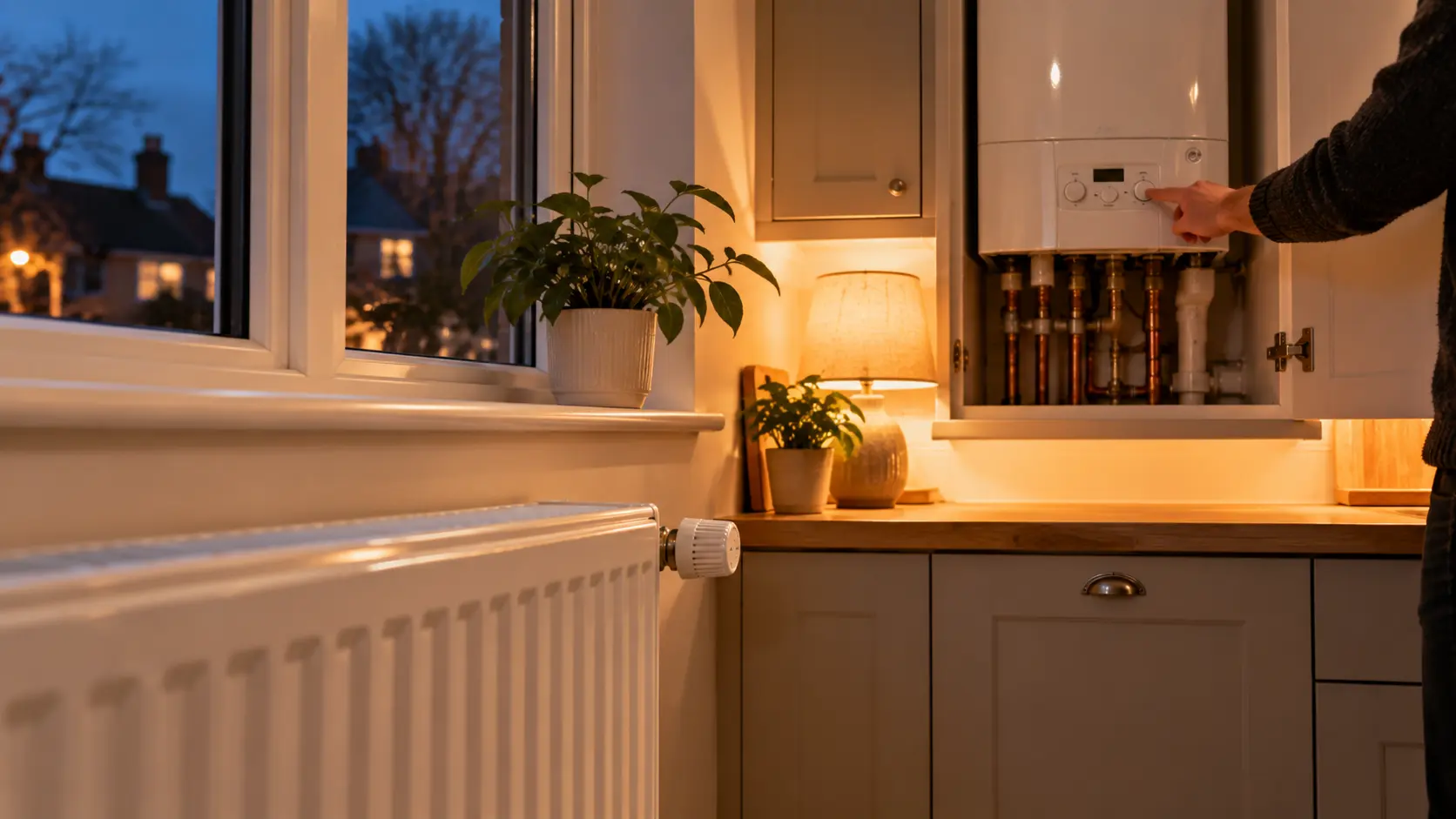
Gurgling
Gurgling or bubbling is usually air trapped in the system. Bleeding the radiators often cures it. Check the boiler pressure afterwards and top it up if it has dropped.
In freezing weather, gurgling from a condensing boiler can also mean the condensate pipe is starting to freeze. If the boiler then stops, thaw the pipe gently with warm water and reset once.
If gurgling keeps coming back, air may be getting in through a leak or a pump problem, and that needs looking at.
Kettling, whistling or rumbling
A sound like a kettle coming to the boil is called kettling. It happens when water overheats in parts of the heat exchanger because flow through it is restricted. The usual causes are:
- Limescale on the heat exchanger, more common in hard water areas
- Sludge in the system restricting circulation
- A pump problem slowing the flow of water
Kettling isn’t usually an immediate danger, but it puts strain on the boiler and wastes energy. It’s worth getting it checked rather than living with it.
Banging in the pipes
Bangs or knocks in the pipework can be caused by pipes expanding as they heat and rubbing against joists, by loose pipe clips, or by water hammer when a valve shuts quickly. Some are a nuisance rather than a fault, especially in older homes where pipes run under floorboards and have been moved during past renovations. Others suggest high pressure or a pump running too fast. An engineer can track down which.
A bang when the boiler lights
If the boiler makes a loud bang or whoomph as it fires up, it may be delayed ignition. Gas builds up before it lights. This needs a Gas Safe engineer promptly. Don’t keep using the boiler if the bang is loud or getting worse, and never try to look inside the casing.
Humming or buzzing
A low hum often comes from the pump, sometimes because it’s set too high or starting to wear. A buzzing sound can come from the fan or from electrical components. If the noise is new and getting louder, book a check. Pump speed settings and electrical parts inside the boiler are for an engineer to adjust, not something to tinker with yourself.
Clicking
A few clicks as the boiler lights are normal. That’s the ignition sparking. Constant clicking without the boiler firing points to an ignition fault, which needs an engineer.
Noisy heating in Sutton homes
South London sits in a hard water area, so limescale is a common factor behind kettling in homes around Sutton, Cheam and Carshalton. An annual service gives the engineer a chance to spot early signs before the noise becomes a breakdown. If an older boiler has become noisy and unreliable, it may be time to look at a new boiler.
Frequently asked questions
Is a noisy boiler dangerous?
Most noises aren’t immediately dangerous, but they’re a sign something isn’t right. A loud bang when the boiler lights is the one to take seriously straight away. If you ever smell gas, turn off the supply if it’s safe and call 0800 111 999.
Can bleeding radiators stop boiler noise?
It often stops gurgling, because that sound is usually trapped air. It won’t fix kettling, banging or humming, which have different causes such as limescale, sludge or a pump problem. If bleeding doesn’t help, an engineer will need to find the cause.
Will a service stop my boiler making noises?
A service can find and sometimes fix the cause, such as a sticking component or a worn pump. Noises caused by limescale or sludge in the wider system may need extra work, such as cleaning the system or descaling the heat exchanger.
New noise from your boiler?
If your boiler has started banging, whistling or gurgling and you’re not sure why, get in touch and we’ll come and find out what’s behind it.