


For most smaller homes with one bathroom, a combi boiler is the simplest choice. It heats water on demand, so there’s no hot water cylinder or loft tanks. For homes with two or more bathrooms used at the same time, a system boiler with an unvented hot water cylinder usually copes better. A regular (conventional) boiler makes sense mainly where an older system with loft tanks needs to stay, or where mains water pressure is poor.
The right answer comes down to how many people use hot water at once, your mains water pressure and flow, and how much space you have. Here’s how each one works and where it fits. When it’s time to choose, our new boilers page explains how we help.
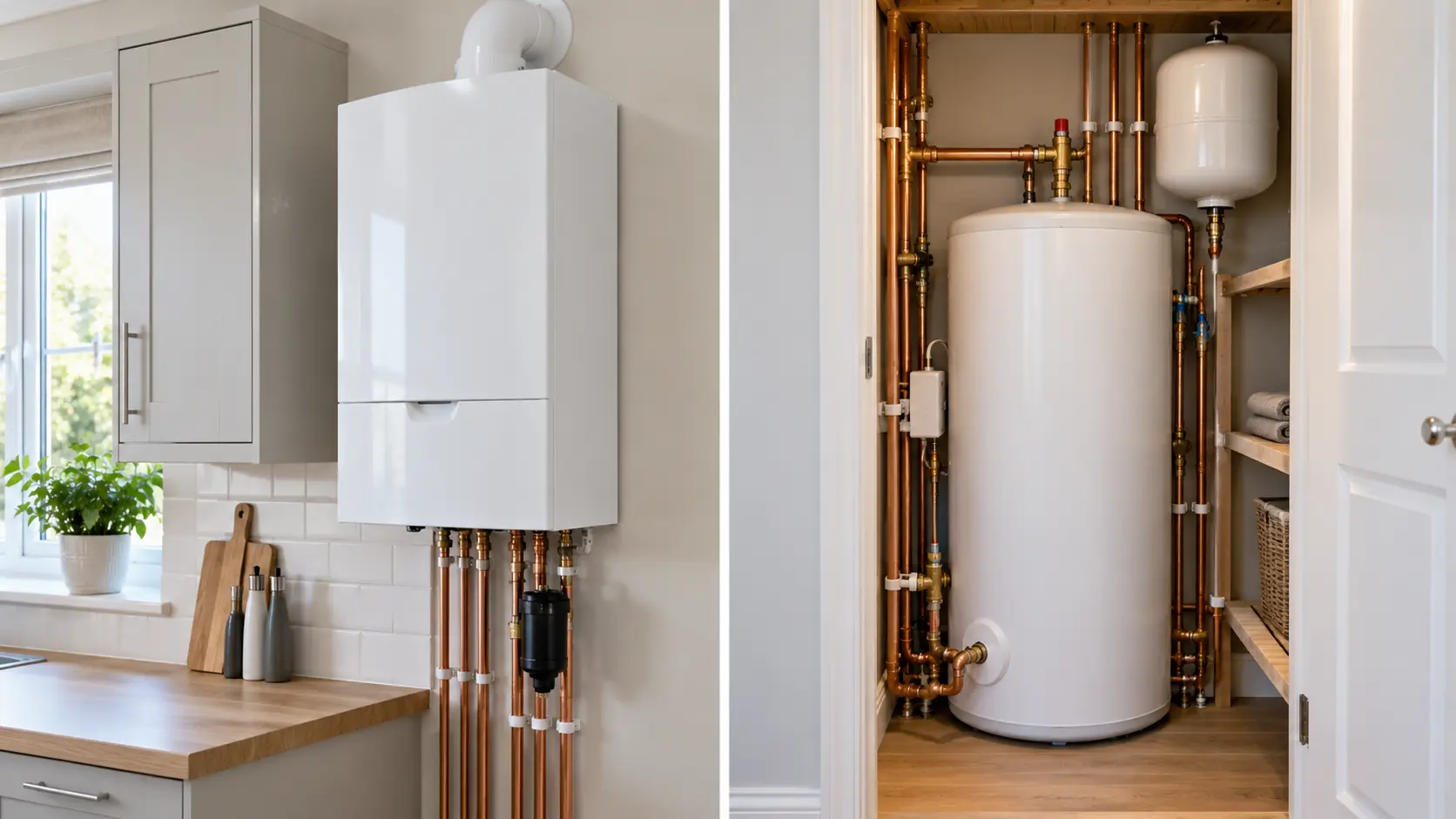
How each type of boiler works
| Combi | System | Regular (conventional) | |
| Hot water | Heated instantly from the mains | Stored in a cylinder | Stored in a cylinder |
| Hot water cylinder | No | Yes | Yes |
| Loft tanks | No | No | Yes (cold water and feed/expansion tank) |
| Space needed | Least | Airing cupboard for the cylinder | Cylinder plus loft space |
| Best for | Flats and homes with one bathroom | Homes with two or more bathrooms | Older systems, low mains pressure |
Combi boilers
A combi heats water directly from the mains as you use it. There’s no waiting for a tank to heat up and no storage to run out of.
The limitation is flow. A combi can only heat so much water at once, so running a shower and a bath tap together usually means a drop in flow or temperature. How much depends on the boiler’s output and your incoming mains pressure and flow rate.
Combis suit flats, terraced houses and many semis with one main bathroom. They free up the airing cupboard and loft, which is a real bonus in smaller homes.
System boilers
A system boiler heats water and stores it in a cylinder, usually an unvented cylinder fed at mains pressure. Several taps and showers can run at the same time with good pressure, as long as the cylinder is big enough for the household.
The trade-off is space for the cylinder and the fact that stored hot water can run out if everyone showers back to back. A larger cylinder solves most of that. Unvented cylinders also need an annual check by a suitably qualified engineer.
Regular (conventional) boilers
A regular boiler works with a cylinder and two tanks in the loft: one for cold water storage and a smaller feed and expansion tank. It’s the traditional setup in many older homes.
Keeping a regular boiler can make sense if the existing pipework is designed around it, if mains pressure is low, or if the household wants to avoid the upheaval of changing the system. Pressure at the taps depends on the height of the loft tank, so showers can be weak without a pump.
Which suits your home?
A simple way to think about it:
- One bathroom, one to three people: a combi is usually the natural choice.
- Two or more bathrooms, busy mornings: a system boiler with an unvented cylinder usually works better.
- Low mains pressure or flow: a combi or unvented cylinder may disappoint; your engineer should measure this before recommending anything.
- Keeping an existing older system largely as it is: a regular boiler may be the least disruptive option.
Plenty of homes around Sutton, Worcester Park and New Malden have moved from older regular systems to combis to free up space. That works well in the right home, but it’s worth checking hot water demand first, especially if a second bathroom or en-suite is on the cards.
What changes if you switch type?
Switching from a regular to a combi boiler usually means removing the cylinder and loft tanks, capping off redundant pipework and upgrading the gas supply pipe if needed. Your existing radiators often stay, though the engineer will check the system is in good condition and may recommend a clean or powerflush.
Moving from a combi to a system boiler means finding space for a cylinder and running new pipework to it.
In both cases, a survey is essential. The engineer should check mains pressure and flow, gas supply, flue position and the condition of the heating system before recommending a boiler. If the cost of a new boiler is a concern, boiler finance can spread it.
Frequently asked questions
Is a combi boiler cheaper to run?
Not automatically. Combis avoid the heat lost from a stored cylinder, which helps smaller households. In larger homes with heavy hot water use, a well-insulated cylinder can be just as efficient. How the boiler is set up and controlled matters more than the type.
Can a combi boiler run two showers at once?
Usually not well. Flow and temperature drop when two outlets are used together. Larger combis cope better, but a system boiler with a cylinder is normally the better choice for homes with two or more showers used at once.
Do I need to replace my radiators with a new boiler?
Often not. Existing radiators can usually be reused if they’re in good condition and correctly sized. The engineer should check for sludge and may recommend cleaning the system before the new boiler is fitted.
Not sure which one you need?
If you’re torn between a combi and a system boiler, get in touch and we’ll pop round, look at your setup and give you a straight answer.